Indian manufacturers have heard the same promises for years. Smart factories. Predictive intelligence. Autonomous operations. Yet many digital transformation projects never move beyond the pilot stage. Teams spend months testing dashboards that never reach the production floor. Factory leaders invest in disconnected systems that fail to improve operations in measurable ways. That frustration is real across the manufacturing industry. Today, the situation is finally changing.
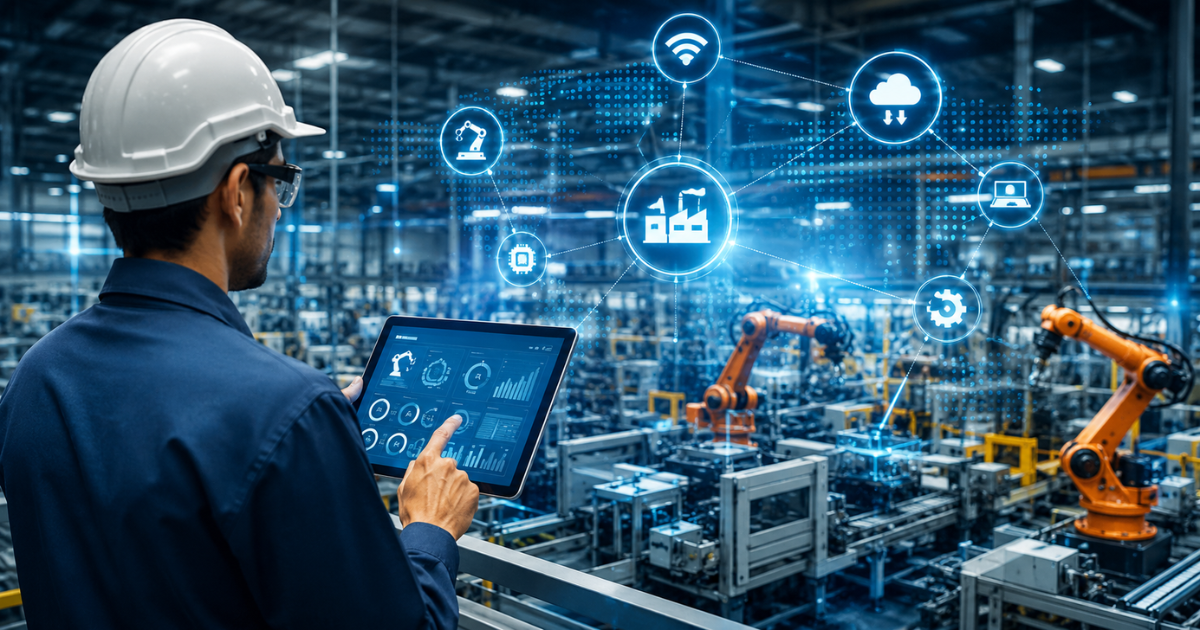
Several Indian manufacturers are now using IoT + AI in manufacturing at scale. These are not small experimental projects. These are production-grade systems that improve efficiency, reduce downtime, and support daily factory operations.
From predictive maintenance to energy optimization, manufacturers are now seeing practical value from connected factory intelligence.
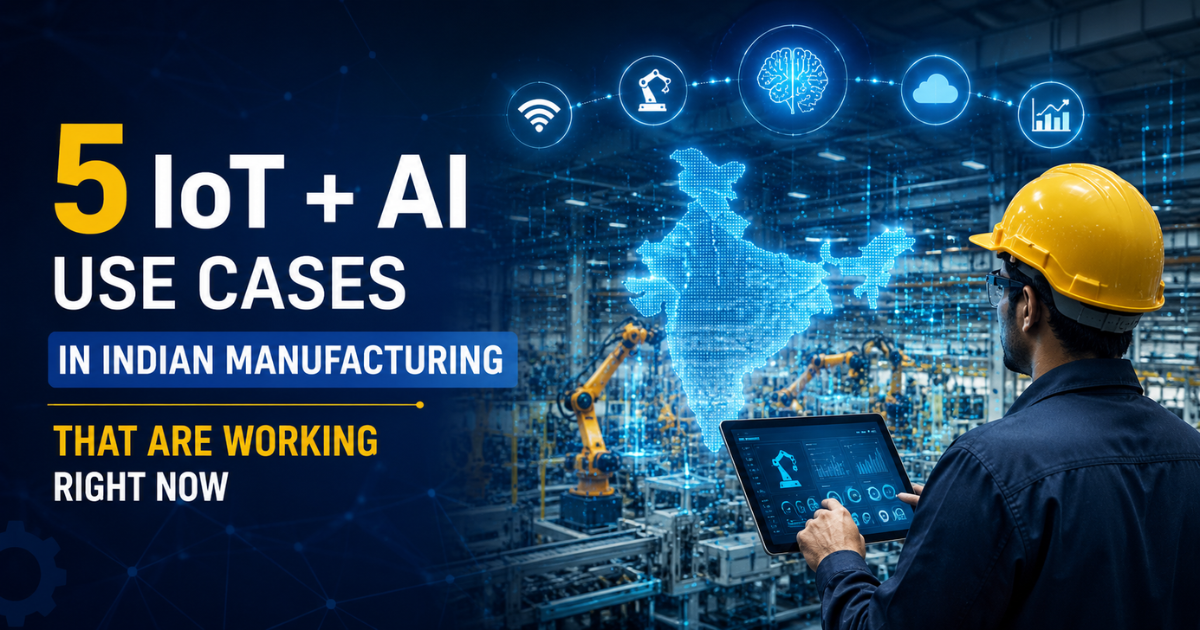
This blog explores five proven IoT + AI use cases in Indian manufacturing that are already working right now and delivering measurable operational impact.
Why Indian Manufacturing Is Finally Moving Beyond Pilot Projects
 For years, digita
l transformation in manufacturing looked impressive during presentations but weak during execution. Many factories installed sensors but never used the collected data properly. Others built dashboards that operators ignored after a few weeks.
For years, digita
l transformation in manufacturing looked impressive during presentations but weak during execution. Many factories installed sensors but never used the collected data properly. Others built dashboards that operators ignored after a few weeks.
Today, the environment is very different. Cloud infrastructure has improved across India. Industrial sensors have become more affordable. AI models are now easier to deploy in factory environments. Most importantly, manufacturing leaders now demand measurable business outcomes instead of technology demonstrations.
According to the McKinsey smart manufacturing report, manufacturers using industrial AI are improving productivity, reducing downtime, and increasing operational efficiency.
Indian manufacturers are now prioritizing:
- Faster operational ROI
- Reduced machine downtime
- Better production visibility
- Lower quality defects
- Smarter energy management
- Improved maintenance planning
This operational focus is driving real adoption across Indian manufacturing plants.
What Makes IoT + AI Projects Successful Today
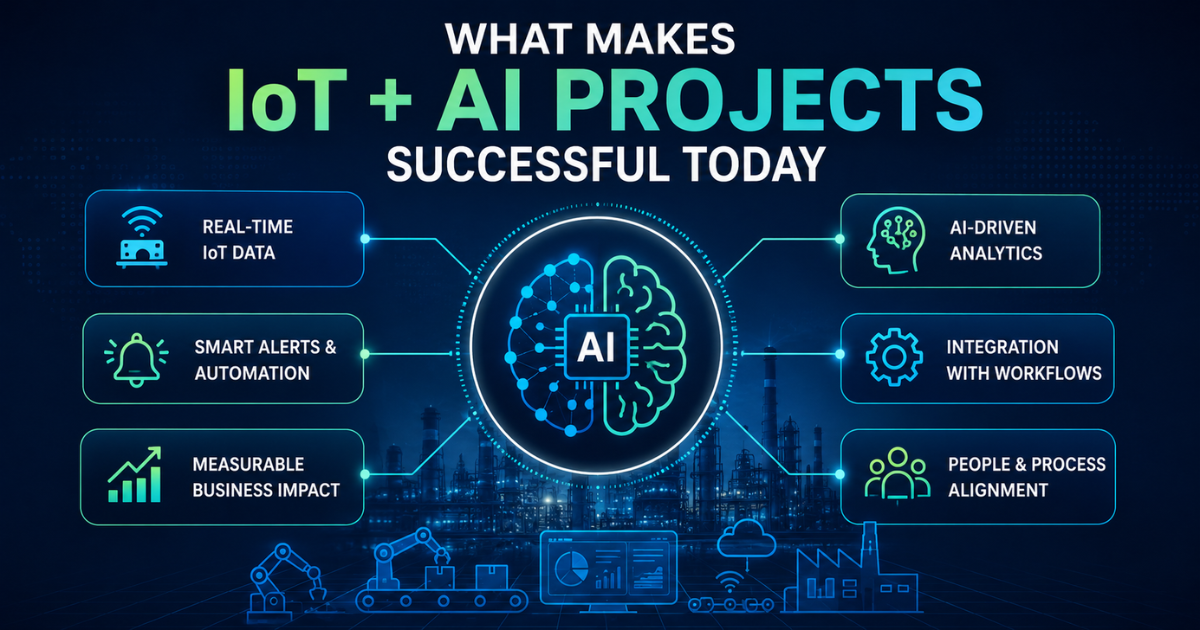
The biggest change is not technology. The biggest change is implementation strategy.
Earlier projects focused heavily on experimentation. Modern projects focus on operational integration and measurable performance improvements. Successful manufacturers now connect AI systems directly with production workflows and plant operations.
Modern industrial systems combine:
- Real-time IoT sensor data
- AI-driven analytics
- Automated alerts
- Production workflows
- Maintenance scheduling systems
- ERP and MES integration
This creates usable intelligence instead of isolated reporting dashboards.
Manufacturers are also investing more in operator training and process alignment. This improves long-term adoption across factory teams.
Old Pilot Projects vs Modern Scaled Deployments
| Old Pilot Approach | Modern Production Approach |
|---|---|
| Dashboard-focused | Operations-focused |
| Isolated test environment | Integrated factory workflows |
| Generic analytics | Plant-specific AI models |
| Short-term experimentation | Long-term operational ROI |
| Minimal operator adoption | Full production team involvement |
For manufacturers exploring digital transformation, our AI development services help businesses build scalable industrial AI systems designed for real manufacturing environments.
Predictive Maintenance for Industrial Equipment
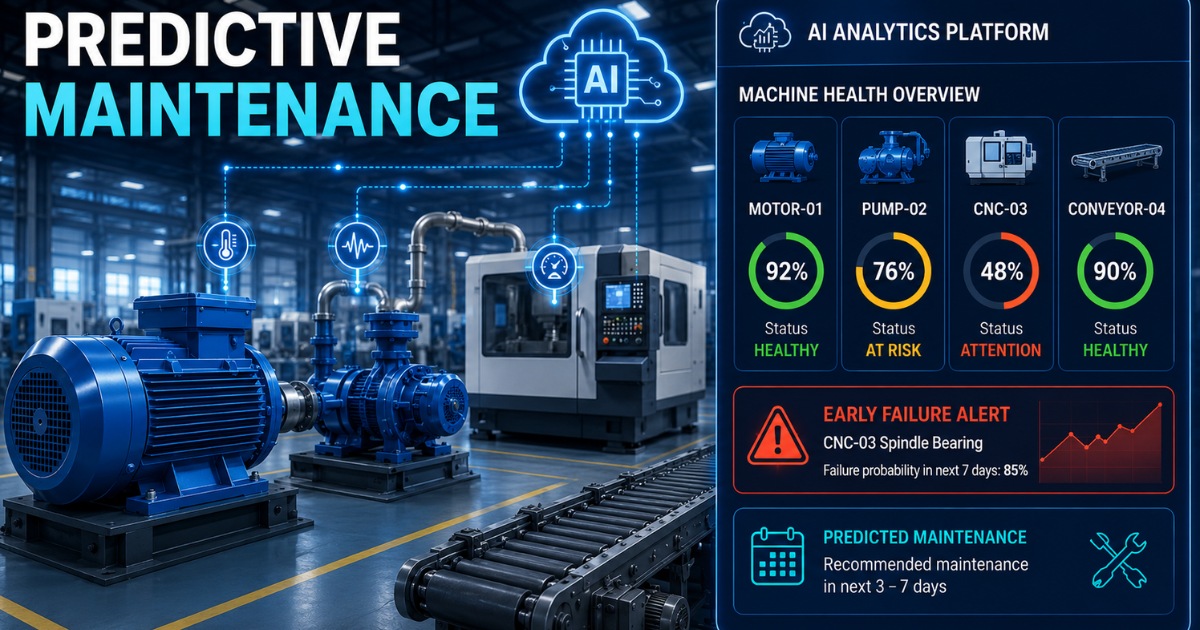
Unplanned downtime remains one of the biggest operational problems in manufacturing. A single machine breakdown can delay production schedules, increase maintenance expenses, and affect customer deliveries. Traditional maintenance models often react too late because teams only respond after equipment fails.
This is where predictive maintenance using IoT and AI is delivering measurable value.
Factories now install sensors on:
- Motors
- Compressors
- CNC machines
- Pumps
- Conveyor systems
- Industrial cooling systems
These sensors continuously collect vibration, pressure, temperature, and performance data. AI models analyze this data in real time and identify patterns linked to future equipment failures. Maintenance teams receive early alerts before breakdowns happen.
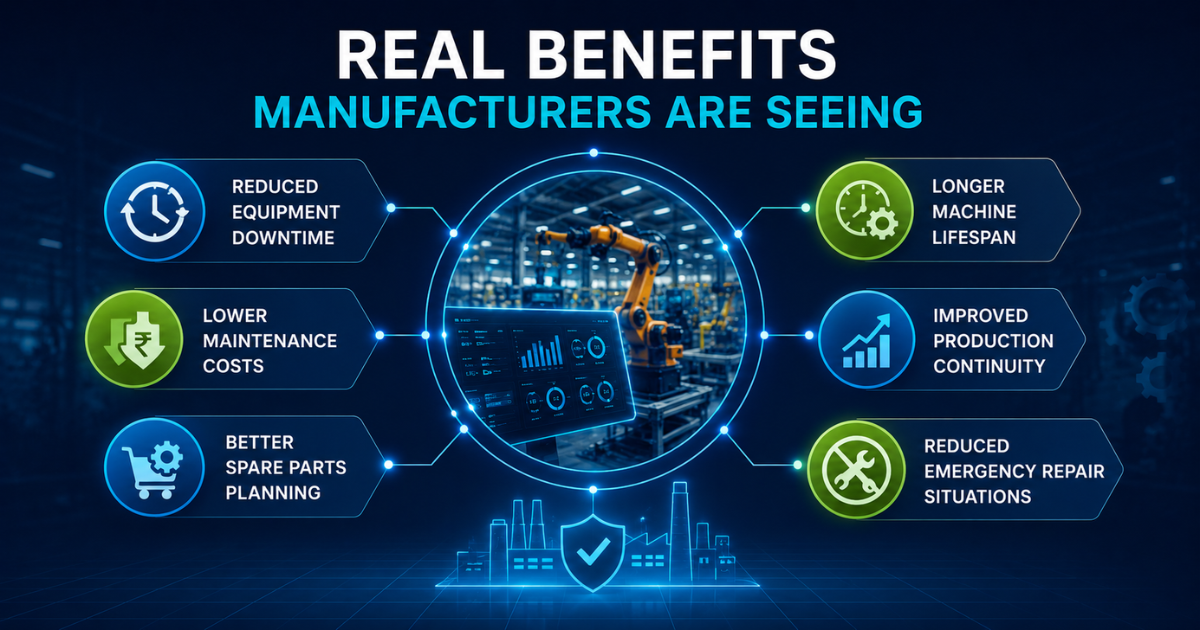
Real Benefits Manufacturers Are Seeing
 "
"
- Reduced equipment downtime
- Lower maintenance costs
- Better spare parts planning
- Longer machine lifespan
- Improved production continuity
- Reduced emergency repair situations
According to IBM's predictive maintenance research, predictive maintenance can significantly improve asset reliability and reduce operational disruptions.
AI-Powered Quality Inspection Systems
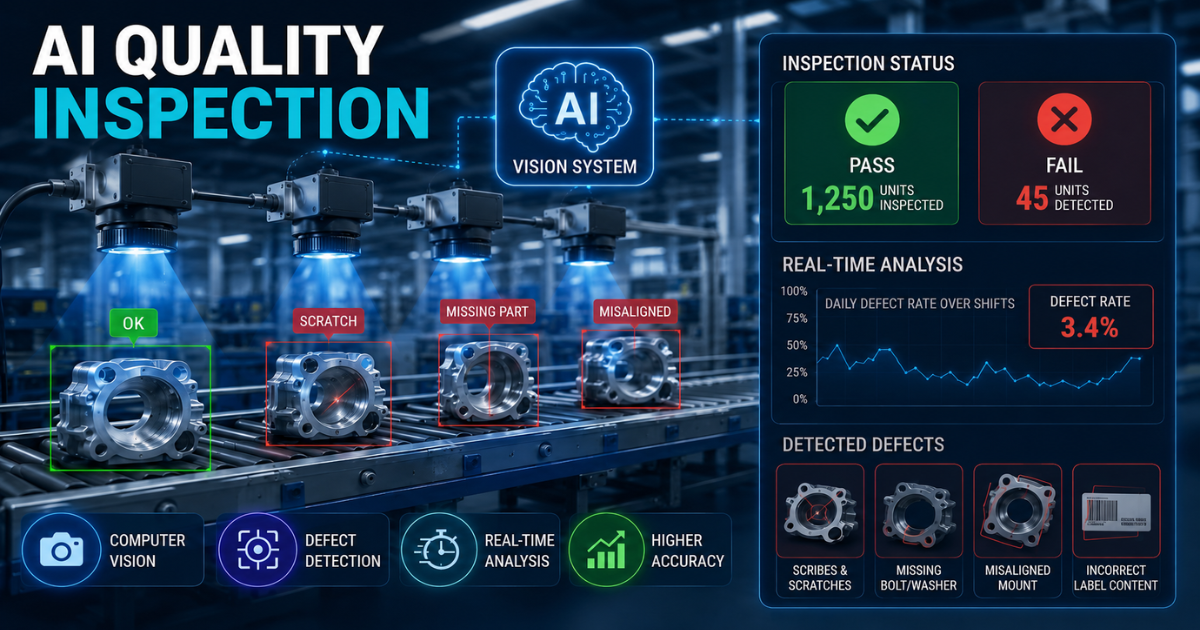
Manual quality inspection creates limitations in high-volume manufacturing environments. Human inspection teams can miss small defects during repetitive production processes. Fatigue and operational pressure reduce inspection consistency over time.
Manufacturers are solving this problem using computer vision systems powered by AI. Cameras installed across production lines capture product images continuously. AI models inspect these images instantly and identify defects in real time.
These systems are now used successfully in:
- Automotive manufacturing
- Electronics production
- Textile factories
- Pharmaceutical packaging
- Food processing plants
- Consumer goods manufacturing
The biggest advantage is consistency and speed. AI inspection systems operate continuously without fatigue and provide reliable quality control throughout production cycles.
Common Defects AI Systems Detect
- Surface scratches
- Incorrect labeling
- Assembly mistakes
- Packaging defects
- Missing components
- Alignment issues
Indian factories are adopting these systems rapidly because industrial camera hardware and AI deployment costs have become more affordable. Our computer vision solutions help manufacturers automate defect detection and improve production accuracy using scalable AI inspection systems.
Energy Optimization in Manufacturing Plants
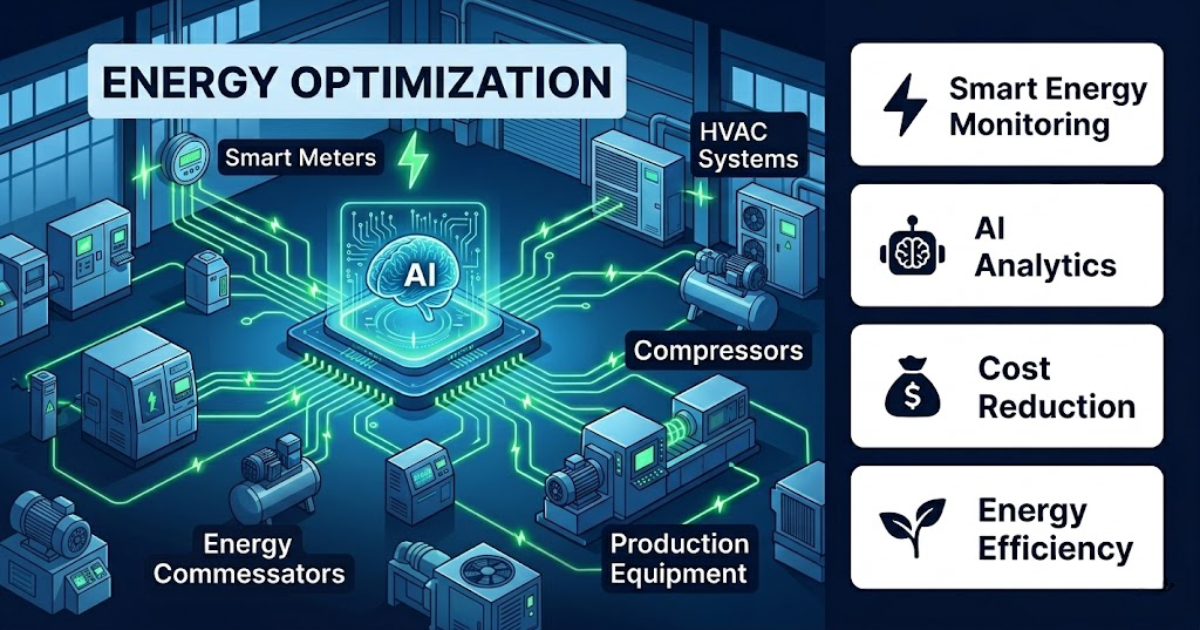
Energy costs directly affect manufacturing profitability. Large factories consume huge amounts of electricity across machinery, HVAC systems, compressors, utilities, and production equipment. Many plants still lack visibility into energy waste across operations.
This is changing with IoT energy monitoring systems combined with AI analytics. Smart meters and IoT sensors now track:
- Equipment energy consumption
- Peak load behavior
- Idle machine usage
- Compressed air leakage
- Temperature variations
- Shift-wise energy usage
AI systems then identify optimization opportunities automatically.
Common Energy Optimization Results
- Reduced peak demand charges
- Lower electricity consumption
- Better production scheduling
- Reduced idle equipment usage
- Improved sustainability reporting
- Better utility planning
Energy Optimization Impact Areas
| Operational Area | AI + IoT Improvement |
|---|---|
| HVAC Systems | Smarter energy scheduling |
| Compressors | Leakage detection |
| Production Equipment | Idle energy reduction |
| Utility Monitoring | Real-time visibility |
| Shift Operations | Load balancing optimization |
According to the International Energy Agency, digital industrial systems can significantly improve industrial energy efficiency.
Smart Production Monitoring and OEE Tracking
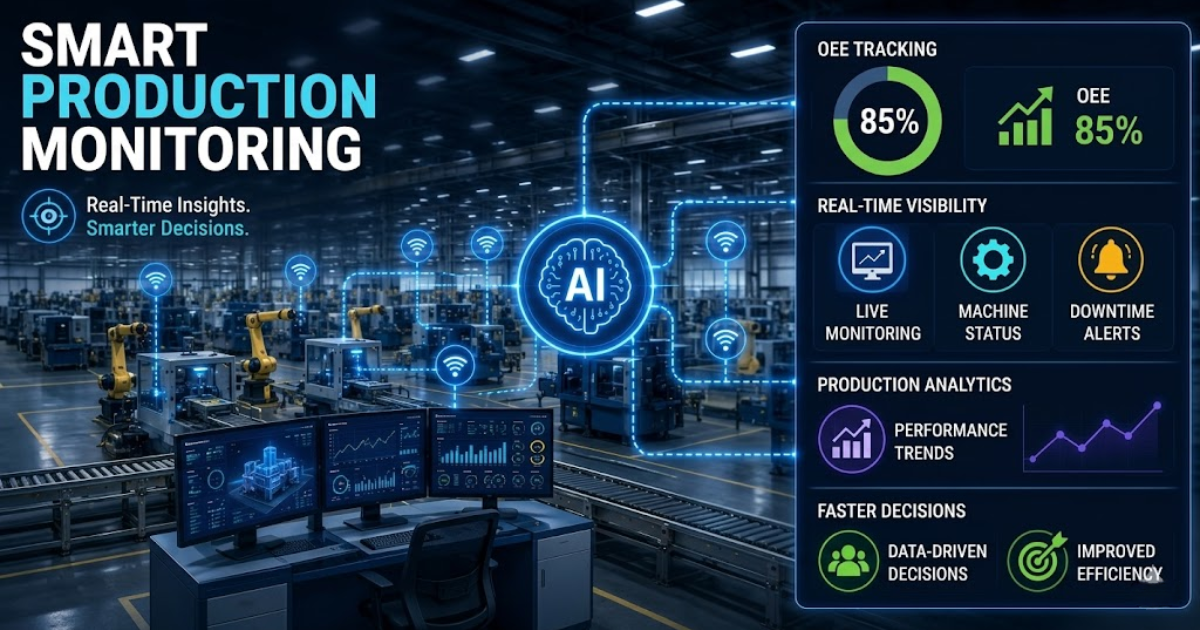
Production visibility remains a challenge for many manufacturing companies. Managers often depend on delayed reports, spreadsheets, and manual production tracking. This creates slow decision-making during production disruptions and operational bottlenecks.
Modern factories now use IoT-connected systems for live production monitoring and operational intelligence. These systems track:
- Machine uptime
- Production rates
- Downtime reasons
- Operator performance
- OEE metrics
- Shift productivity trends
AI models analyze production patterns and identify operational inefficiencies quickly. This allows supervisors and plant managers to respond faster to issues on the production floor.
Benefits of AI-Driven Production Monitoring
- Real-time operational visibility
- Faster issue resolution
- Better production planning
- Improved throughput
- Higher OEE performance
- Improved shift coordination
Many manufacturers are now using centralized dashboards across multiple factory locations for unified operational monitoring. For manufacturers planning scalable industrial systems, our IoT development services support real-time production intelligence across factory operations.
Warehouse and Inventory Intelligence
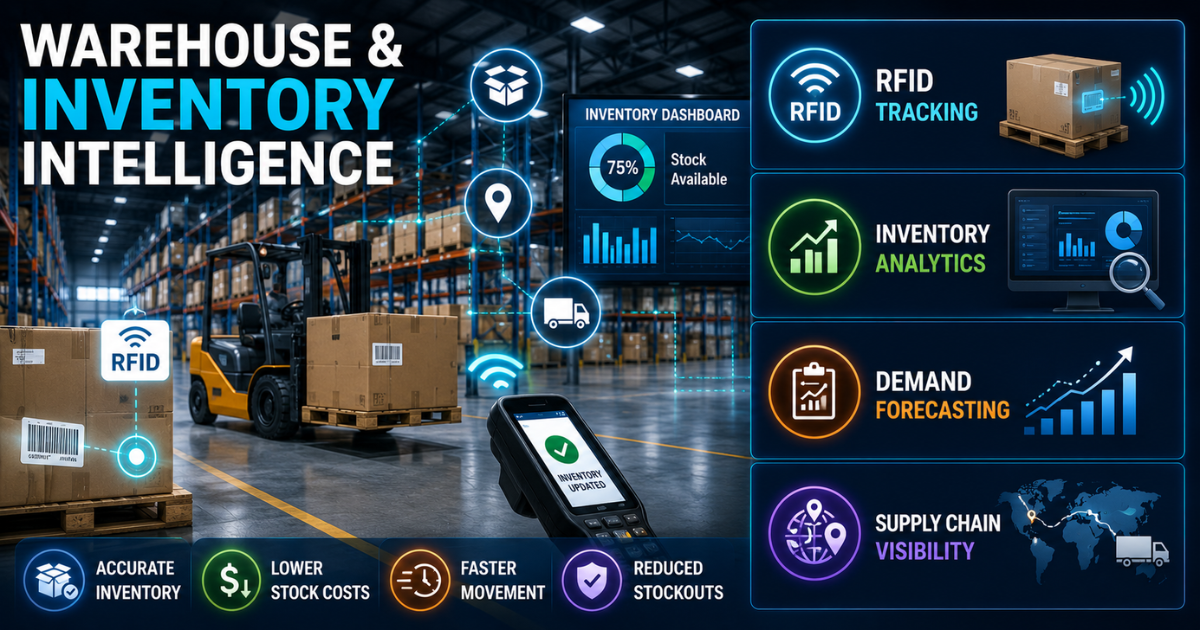
Inventory inefficiency creates hidden operational costs across manufacturing operations. Manufacturers often struggle with inaccurate stock levels, delayed material movement, overstocking, and supply shortages. These problems directly impact production continuity and operational planning.
IoT + AI systems are helping solve these operational challenges. Warehouses now use:
- RFID tracking systems
- Smart barcode scanners
- Connected inventory platforms
- AI demand forecasting
- Automated stock alerts
- Real-time warehouse analytics
These systems improve inventory accuracy and reduce supply chain delays. AI models can also forecast raw material demand using production history, supplier behavior, and operational patterns.
Operational Improvements Manufacturers Are Seeing
- Faster inventory movement
- Lower stock holding costs
- Better raw material planning
- Reduced supply chain delays
- Improved warehouse efficiency
- Better inventory accuracy
This becomes highly valuable for manufacturers operating multiple plants or large warehouse facilities.
How Indian Manufacturing SMEs Are Adopting AI Faster
Earlier, advanced manufacturing technology was limited to large enterprises with huge budgets. Today, small and mid-sized manufacturers are also adopting AI-driven operational systems.
This shift is happening because implementation costs are decreasing steadily. Cloud-based infrastructure, affordable IoT hardware, and modular AI platforms now allow SMEs to start with smaller deployments. Manufacturers no longer need massive upfront investments to begin digital transformation.
Indian SMEs are increasingly adopting:
- Cloud production dashboards
- AI-powered quality inspection
- Smart maintenance alerts
- Energy monitoring systems
- Inventory intelligence platforms
Many manufacturers start with one operational problem first. Once they see measurable results, they expand gradually into other production areas. This phased approach reduces risk and improves internal confidence across operations teams.
Why Some IoT + AI Projects Still Fail
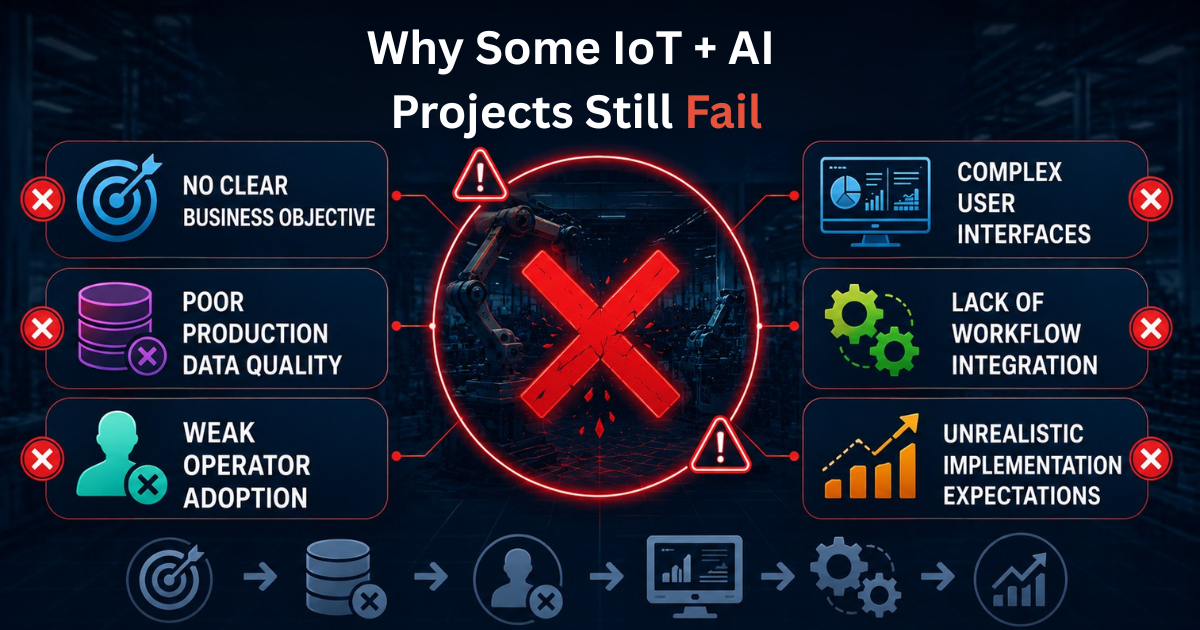
Not every implementation succeeds. Many manufacturers still struggle because they prioritize technology before operational alignment. Some deployments become overly complicated and difficult for factory teams to use effectively.
The most common reasons for failure include:
- No clear business objective
- Poor production data quality
- Weak operator adoption
- Complex user interfaces
- Lack of workflow integration
- Unrealistic implementation expectations
Some companies also attempt large-scale deployment too early without validating smaller operational improvements first. Successful manufacturers usually start with one measurable operational challenge and expand gradually after proving ROI. That practical approach improves adoption and reduces implementation risk.
How Indian Manufacturers Can Start the Right Way
The best strategy is practical and measurable execution. Manufacturers should begin with one operational problem that already affects production performance or profitability.
Good starting areas include:
- Downtime reduction
- Energy monitoring
- Defect detection
- Production tracking
- Inventory visibility
Before implementation:
- Audit existing factory systems
- Identify available machine data
- Define measurable KPIs
- Align production teams early
- Build scalable infrastructure
- Prioritize operational usability
Manufacturers should also focus on systems that integrate easily with existing ERP and MES environments. Long-term success depends more on operational adoption than technology complexity.
Conclusion
The manufacturing industry in India is entering a practical phase of industrial transformation. The difference today is clear. Manufacturers are no longer experimenting with disconnected pilot projects. They are deploying practical IoT + AI manufacturing solutions that improve operations in measurable ways.
From predictive maintenance to intelligent quality inspection, these systems are already delivering measurable operational value across Indian factories. The companies moving early will build stronger operational advantages over the next decade.
If your manufacturing business is exploring AI and IoT transformation, this is the right time to begin with focused and scalable implementation.
Book a Free Scoping Call
At Movenetics Digital, we help manufacturers build practical AI and IoT systems designed for real production environments. Whether you want to reduce downtime, improve production visibility, automate quality inspection, or optimize warehouse operations, our team can help you identify the right starting point.
Book a Free Scoping CallFrequently Asked Questions
IoT + AI in manufacturing refers to the use of connected sensors (IoT) and artificial intelligence to monitor, analyze, and improve factory operations such as production, maintenance, quality control, and energy usage in real time.
Key use cases include predictive maintenance, AI-powered quality inspection, production monitoring (OEE tracking), energy optimization, and warehouse/inventory intelligence.
IoT is used in Indian factories for real-time machine monitoring, predictive maintenance, energy tracking, production visibility, and warehouse management through connected sensors and smart devices.
Not necessarily. With cloud platforms and affordable sensors, many SMEs in India now start with small pilot systems and scale gradually based on ROI and operational benefits.
Predictive maintenance uses IoT sensor data and AI models to detect early signs of machine failure so that maintenance can be done before breakdowns happen, reducing downtime and cost.