Manufacturing teams already rely on PLC systems to control machines, monitor production lines, and maintain plant operations. But many factories now face new challenges. Equipment downtime increases costs. Manual monitoring slows production. Data stays trapped inside disconnected systems. That is why manufacturers are exploring PLC Integration with AI to improve visibility, predictive maintenance, and operational efficiency.
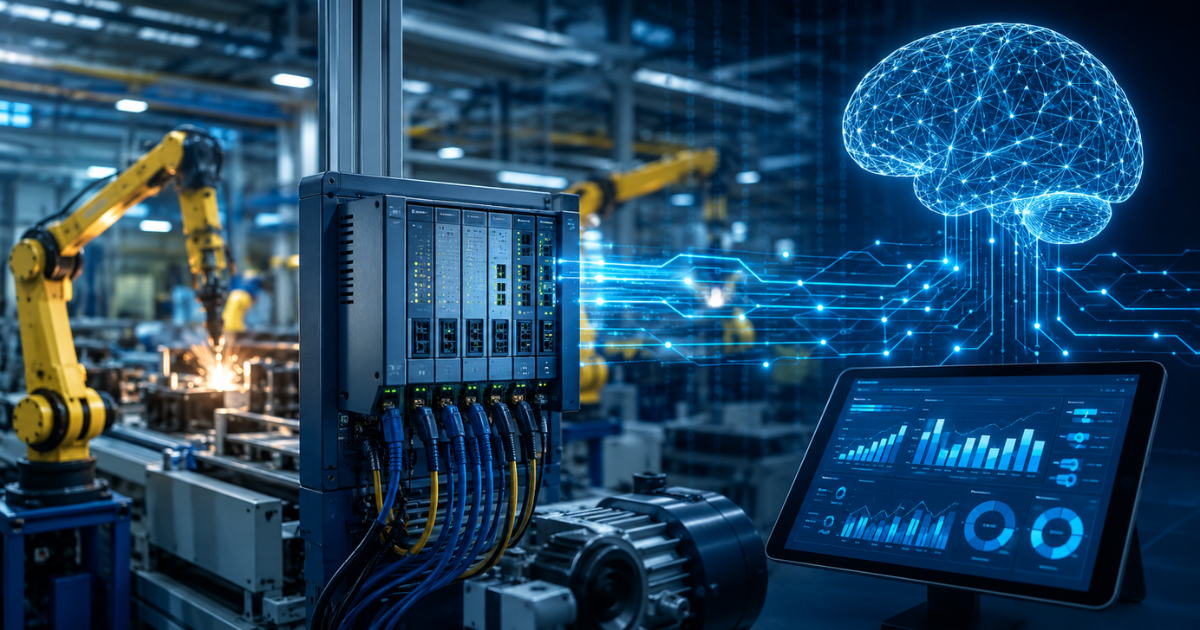
AI can transform raw factory data into actionable insights. However, many plant engineers struggle to understand where AI fits into existing PLC infrastructure.
At Movenetics Digital, we help manufacturing companies modernize operations with scalable AI automation systems that work alongside industrial control environments.
What Is PLC Integration with AI?
Factories use PLCs to control industrial machines and automate production tasks. PLCs collect operational data from sensors, motors, actuators, conveyors, and control systems every second.
Traditional PLC systems focus on execution and monitoring. They do not analyze patterns deeply. AI systems add intelligence to this operational data.
PLC Integration with AI combines industrial automation systems with machine learning and real-time analytics. This allows factories to predict failures, optimize production, and automate operational decisions.
For example, AI can analyze vibration data from a motor and predict maintenance needs before equipment fails.
According to IBM Manufacturing Insights, AI-driven manufacturing analytics can improve operational efficiency and reduce unplanned downtime significantly.
Why Manufacturing Teams Are Adopting AI
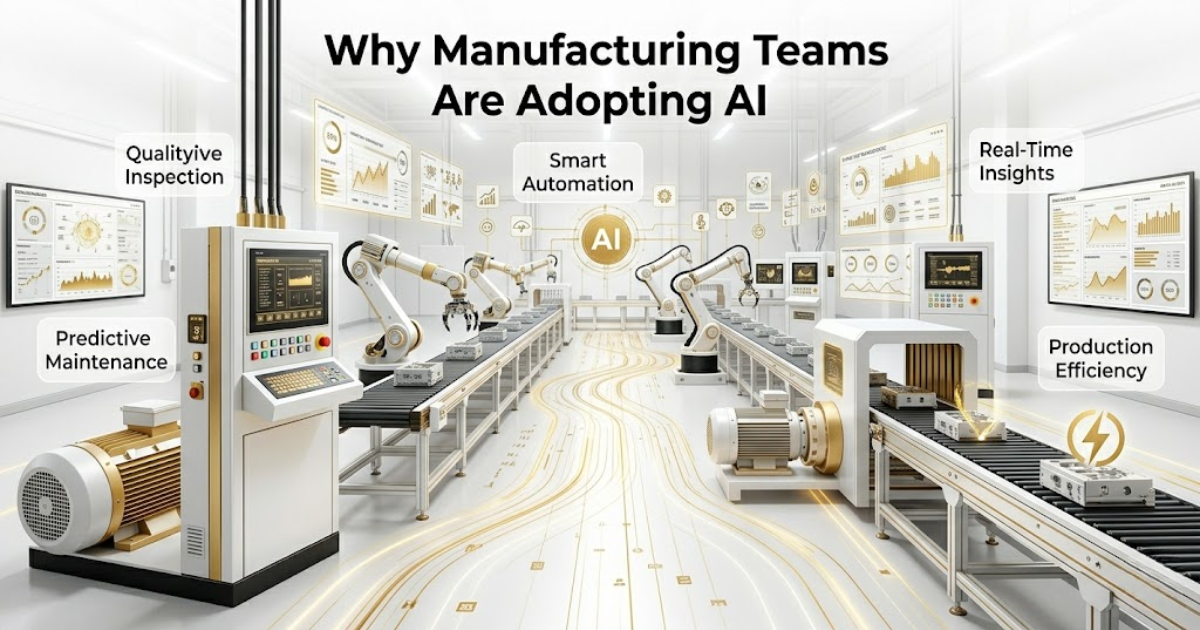
Manufacturing plants generate huge amounts of operational data daily. Most factories only use a small percentage of that information effectively.
Operations teams now need faster decision-making and better production visibility. AI helps convert factory data into real operational insights.
Many manufacturing companies adopt AI because they want to:
- Reduce equipment downtime
- Improve production quality
- Predict maintenance issues
- Increase operational efficiency
- Lower maintenance costs
- Improve energy usage
According to McKinsey & Company, AI-enabled manufacturing can increase productivity by up to 20%.
Plant engineers also benefit because AI reduces manual inspection work and improves process visibility.
How PLC Systems Work in Modern Factories
PLC systems serve as the foundation of industrial automation. These controllers manage machinery and monitor production workflows continuously.
Most PLCs communicate with:
- Sensors
- HMI systems
- SCADA platforms
- Industrial robots
- Conveyor systems
- Industrial IoT devices
Popular PLC manufacturers include:
Traditional PLC logic follows predefined programming rules. This approach works well for machine control but cannot detect complex operational patterns. AI enhances these systems by analyzing historical and real-time production data.
| PLC Function | AI Enhancement |
|---|---|
| Machine monitoring | Predictive analytics |
| Alarm systems | Intelligent anomaly detection |
| Sensor data collection | Pattern recognition |
| Maintenance schedules | Predictive maintenance |
| Production tracking | Optimization recommendations |
Where AI Fits into PLC Environments
Many plant engineers assume AI replaces PLC systems. That is not correct. AI works alongside industrial automation systems instead of replacing them.
PLCs continue controlling machines in real time. AI systems analyze operational data at higher levels.
AI typically connects through:
- SCADA systems
- Edge computing devices
- OPC UA gateways
- Industrial IoT platforms
- Manufacturing execution systems
This architecture allows AI to monitor production without interrupting machine control. For example, an AI model can detect abnormal motor behavior while the PLC continues operating equipment safely.
At Movenetics Digital, we help manufacturers integrate AI safely into existing industrial environments without disrupting operations.
Benefits of PLC Integration with AI
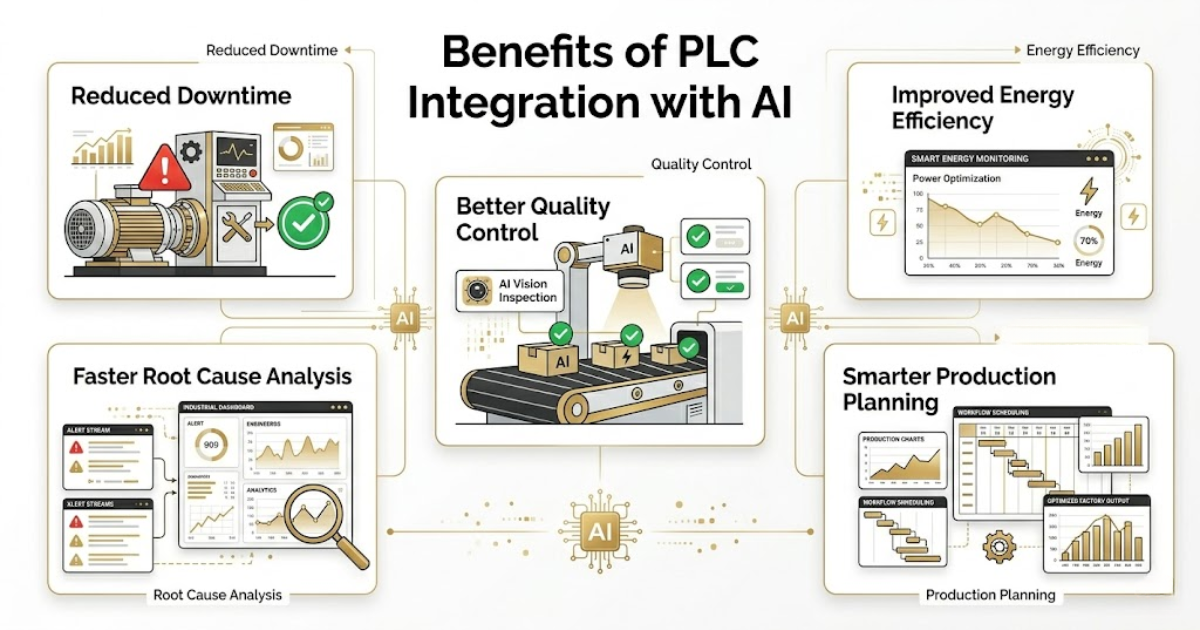
Factories adopting AI-powered automation gain several operational advantages. These improvements affect maintenance, quality control, production efficiency, and workforce productivity. The biggest benefit comes from predictive operational intelligence.
Reduced Downtime
AI models identify equipment failures early. Teams can schedule maintenance before breakdowns occur.
Better Quality Control
Computer vision systems detect defects faster than manual inspection.
Improved Energy Efficiency
AI analyzes energy consumption patterns and identifies waste.
Faster Root Cause Analysis
AI helps engineers identify production issues quickly.
Smarter Production Planning
AI systems forecast production bottlenecks using operational trends.
These benefits improve operational performance while reducing costs.
Common Challenges Before Starting
Many AI projects fail because factories underestimate implementation complexity. Plant engineers must evaluate infrastructure readiness before deploying AI systems.
Several operational challenges appear during early adoption.
Poor Data Quality
Incomplete sensor data reduces AI accuracy.
Legacy Equipment
Older PLC systems may lack modern communication protocols.
Cybersecurity Risks
Industrial networks require strong security protections.
Integration Complexity
Factories often use disconnected systems from multiple vendors.
Limited Internal Expertise
Many teams lack AI engineering experience.
Operations teams should start with small pilot projects before scaling AI across plants.
According Deloitte Manufacturing Insights, manufacturers that begin with focused AI pilots achieve faster adoption success.
Data Requirements for AI Integration
AI systems depend heavily on operational data quality. Manufacturing teams must prepare clean and consistent data pipelines before deploying machine learning models.
Factories should evaluate:
- Sensor reliability
- Data storage systems
- Historical production records
- Network infrastructure
- Real-time communication protocols
Important industrial protocols include:
- OPC UA
- Modbus
- Ethernet/IP
- Profinet
- MQTT
Manufacturers also need centralized data collection systems for scalable AI deployment.
| Data Requirement | Why It Matters |
|---|---|
| Historical machine data | AI model training |
| Real-time sensor streams | Live monitoring |
| Consistent timestamps | Accurate analysis |
| Structured data storage | Faster processing |
| Secure connectivity | System protection |
Without proper data infrastructure, AI systems produce unreliable insights.
Best AI Use Cases for Manufacturing Plants
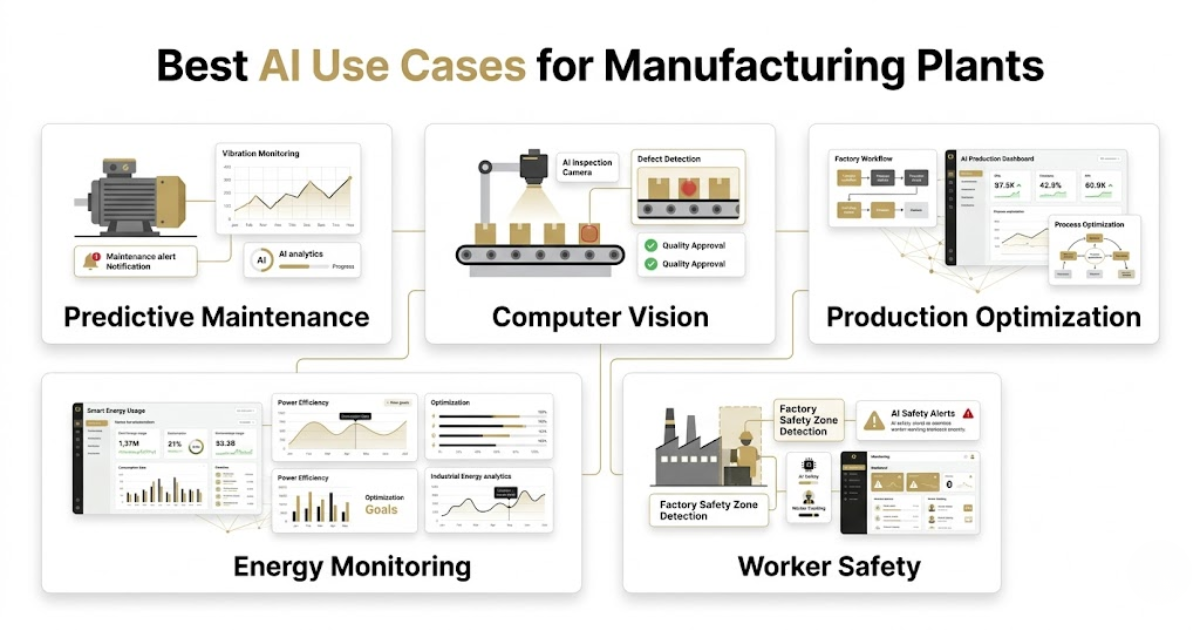
Not every manufacturing process needs AI immediately. Teams should prioritize high-impact operational problems first. The best starting point usually involves maintenance or quality control.
Predictive Maintenance
AI predicts machine failures using operational patterns.
Computer Vision Inspection
AI cameras detect product defects automatically.
Production Optimization
AI identifies bottlenecks and workflow inefficiencies.
Energy Monitoring
AI analyzes energy consumption trends.
Worker Safety Monitoring
AI systems identify unsafe operational conditions.
Factories achieve better ROI when they focus on measurable operational improvements first. At Movenetics Digital, we help manufacturers identify practical AI use cases based on plant operations and infrastructure readiness.
PLC Integration Architecture Overview
Manufacturing teams should understand how industrial AI architecture works before implementation begins. This helps avoid integration problems later.
A typical AI-enabled industrial environment includes several layers.
Industrial Layer
PLCs, sensors, motors, and industrial devices continuously collect machine and production data from the factory floor. This layer forms the foundation of industrial automation by enabling real-time machine control and monitoring.
Communication Layer
Industrial communication protocols securely transfer data between PLCs, SCADA systems, edge devices, and cloud platforms. Reliable communication ensures smooth data flow across connected manufacturing systems.
Edge Computing Layer
Edge devices process operational data close to machines without depending entirely on cloud systems. This reduces latency and enables faster responses for critical industrial operations.
AI Analytics Layer
Machine learning systems analyze production trends, equipment behavior, and operational patterns using factory data. AI models help teams detect anomalies, predict failures, and improve production efficiency.
Visualization Layer
Dashboards display operational insights, machine status, and performance metrics in an easy-to-understand format. Engineers and plant managers use these dashboards to make faster and smarter operational decisions.
This layered architecture improves scalability, strengthens operational visibility, and protects production stability across modern manufacturing environments.
How Movenetics Digital Supports Industrial AI Projects
Industrial AI projects require both software expertise and operational understanding. Manufacturing teams need solutions that integrate safely with production systems.
At Movenetics Digital, we design scalable industrial AI systems for manufacturing environments.
Our services include:
- PLC data integration
- Industrial AI development
- Predictive maintenance systems
- Computer vision solutions
- Edge AI deployment
- Factory workflow automation
We focus on practical deployment strategies that reduce operational risk while improving factory performance. Our team helps manufacturers modernize operations without disrupting critical production workflows.
Conclusion
Manufacturing operations are becoming more data-driven every year. Traditional PLC systems remain essential for machine control, but modern factories need deeper operational intelligence.
That is why PLC Integration with AI is becoming a critical investment for manufacturers focused on efficiency, uptime, and scalability.
AI does not replace PLC infrastructure. It enhances industrial systems with predictive insights, intelligent monitoring, and operational optimization.
Factories that prepare early will improve production visibility, reduce downtime, and create smarter manufacturing environments.
If your team is evaluating industrial AI adoption, Movenetics Digital can help you plan the right integration strategy.
Ready to integrate AI with your PLC systems?
Connect with Movenetics Digital and discover how AI-powered factory automation can reduce downtime, improve quality, and transform your manufacturing operations.
Book a Free Scoping CallFrequently Asked Questions
PLC Integration with AI combines traditional industrial control systems with artificial intelligence technologies to transform machine data into actionable insights. While PLCs continue managing real-time machine operations, AI analyzes production, maintenance, and sensor data to identify patterns, predict equipment failures, and optimize manufacturing processes.
Integrating AI with PLC systems helps manufacturers reduce unplanned downtime, improve product quality, increase operational efficiency, and lower maintenance costs. AI can also support predictive maintenance, energy optimization, anomaly detection, and production planning, enabling teams to make faster and more informed decisions.
Yes. AI solutions are designed to work alongside existing PLC infrastructure rather than replace it. Manufacturers can connect AI platforms through SCADA systems, OPC UA gateways, Industrial IoT devices, edge computing platforms, and manufacturing execution systems (MES), allowing AI to analyze operational data without disrupting machine control.
Common challenges include poor data quality, legacy equipment limitations, cybersecurity concerns, integration complexity, and limited in-house AI expertise. Successful implementation typically starts with a focused pilot project and a strong data foundation to ensure accurate AI-driven insights.
Predictive maintenance is often the most effective starting point because it delivers measurable business value quickly. By analyzing machine performance, vibration, temperature, and sensor data, AI can identify potential equipment issues before failures occur, helping manufacturers reduce downtime, extend asset life, and improve maintenance efficiency.